Thursday, October 27, 2011

The Fool on the Hill


Before my parents and I visited Falling Water, we spent the morning visiting Kentuck Knob, another Frank Lloyd House in the area.

Kentuck Knob was built almost 20 years after Falling Water and is still in private hands. The house is subtle and magnificent. Yet, the owner wanted no pictures of the inside of the house. Mostly, I think it's because the house is cluttered with his collections, and the opposite of what Wright intended.

Unlike Falling Water, which is fit into the side of a hill next to a brook, Kentuck Knob sits on top of a hill, with view of the valley. As you circle down the hill, the owner has created an incredible sculpture garden.

So Long, Frank Lloyd Wright


Last April, I went to a family wedding near Uniontown, PA in Fayette County.

As a kid, I used to go to Ohiopyle in Fayette County with my cousin and her family where they had a cottage along the Youghiogheny River. We'd swim, water ski and go tubing during summer vacations. Now, my younger cousin was getting married just miles away from that summer cottage.

I had been trying to get back to that area for years to visit the Frank Lloyd Wright houses' Falling Water and Kentuck Nob. My family is from Western PA. However their hometown is not close to where the houses are located, and during our numerous visits, we were never able to arrange a side trip.

My parents and I thought that where the wedding was and the Wright houses were would be on opposite ends of the county. And, we tried to plan accordingly. As it turns out, they were only about 15 miles away.

Wednesday, October 26, 2011

West Chelsea Galleries


A visit to some of the galleries in West Chelsea a few weeks ago. The costumes are from the Chicago based costume artist Nick Cave (no, not the Australian of the Bad Seeds. I made that mistake, too.)


Tuesday, October 25, 2011

The Humanistic Approach


After writing about Paul Simon's birthday yesterday, my mind still wandered over the memories and influence of Simon and Garfunkel. Simon and Garfunkel are no great philosophers, teachers or political activists, but their music was able to capture an emotional response to the upheaval and painful changing of the times.

A few weeks ago I was up late after work and happened to stumble on a documentary on the Ovation Channel (yes, a real channel.. who knew?) about the 40th anniversary of the making of the album "Bridge Over Trouble Water." I was exhausted but I became engrossed in the movie.

In late 1968, Simon and Garfunkel asked Charles Grodin to direct a prime-time documentary of their music. The clip from the more recent documentary reflects on the difficult process of getting their show aired. As they state in the clip, they wanted to present a piece that reflected where they were at their careers, what motivated, engaged and inspired them, their music. However, a conflict arose between the sponsors and the artists about what should be conveyed to the public. I was able to find the clip posted on YouTube.

The sponsor wanted a piece that didn't challenge the audience. He wanted background music with friendly images, without causing thought or introspection. The guy said that the Southern customers of AT&T didn't want to see integration of blacks and whites, they didn't want to see poverty, kids suffering, riots in the streets, images of assassinated political leaders.

What is astonishing to me is how marketing executives thought they had the moral high ground to decide what is acceptable and unacceptable for their public to see. I don't mean in the sense that they thought they might have been buying a Richard Lester Beatles movie or just another Monkees episode and ended up with a politically motivated attack piece.

The executive tried to make Grodin feel bad about presenting his ideology, but I also think it was a moment of absolute honesty. He basically said that some people don't want to be humanists. They did not want to not be exposed to the realities of their world, the beauty, the hatred, the happiness, the inspiring, the sad and the devastating. They don't want to be connected, they don't want to empathize with people who are suffering, or act like it's theirs to change.

The executive believed that AT&T's customers had a fixed view of their class, their place in the world and they did not want those views confronted. Their customers were not poor, black or dispossessed, they were from a separate class or even caste. Plus, if anything, their customers took pride in not being those people, which entitled them to not have conscious contact, recognition or empathy. In fact, the product that AT&T wanted to put out was devoid of any sympathy, guilt or responsibility.

All these decades later and nothing's really changed. Maybe a few laws, but people haven't. People see what they want to see: liberals, conservatives, Democrats, Republicans, assassinated people, poor people, lazy people. Some people see hope. Some people see the end of days.

We're indoctrinated in school with the notion that Americans are different, special. That we believe in equal rights, and freedom and higher ideals. That we're better than other countries. Yet, as in many other countries, we fall to similar thinking of internal divisiveness where there are castes, or rival religions or tribes, no different than countries in Africa, Eastern Europe and so on.

Not only do we actively look away from our fellow human beings, dismiss them, and justify our own actions or lack of empathy, but we expect to be protected and cocooned by the people and structure of society around us.

Monday, October 24, 2011

BRIDGE by Paul Simon & The Jesse Dixon Singers


Here's the YouTube clip of Paul Simon singing Bridge Over Trouble Water with The Jesse Dixon Singers.

The King of Forest Hills


A few weeks ago the rock-n-roll legend Paul Simon turned 70.

There is a strange realization that the people who influenced modern pop music, the people just outside the Baby Boomer generation, but completely embraced and symbolic of the 60s and 70s are now senior citizens. John Lennon would have been 71; Otis Redding would have been 70 in September; Buddy Holly 75 and so on.

Paul Simon's voice, sound, presence, and music have been a constant omnipresence in my life.

My parents, devout lovers of rock-n-roll music and children of the 60s, played the Simon and Garfunkel albums constantly while I was a child, as well as Simon's solo efforts. So much that I have long embedded the music in my DNA. I have assumed that the music is classic only because I can't ever think of a moment where I didn't know Simon's songs.

Simon and Garfunkel were the undercurrent of what I imagined fall and winters in upstate New York where my parents were studying during the late 60s. At times moody self aware, greens flying by from a car window winding down mountains, a dark peacoat and shaggy hair.

I hear the opening strains of the song America and I think of Pennsylvania Turnpike reststops as a child. I can see the washed out blues and aquamarine tiles and glass and smell of chemical drenched antiseptic cleaners that was a 70s cathedral to the dominance of the automobile. The sunsetting over the Appalachian Mountains. Being shuffled into and out of the car, emptying bladders, and then refilled with maybe the tinny taste of a can of coke and a candy bar. I can remember standing in line while my parents bought a few snacks staring at the chotchkies in the gift store. Looking at the glass snow balls that displayed Hummel-like villages covered with fake snow of PA towns that never existed. The magnets, the collector spoons, the tiny ceramic animals, cheap toys, postcards of Bedford, and road games all displayed and a constant wonder of why we never bought anything.

I have often joked that my parents played music so much that the musicians themselves seemed like lost family members. The Baby Boomer icons of John Lennon, Paul McCartney, Paul Simon, Bob Dylan all seemed like distant uncles. Their presence and influence constantly felt, if not tangible.

Paul Simon was the uncle from Queens, a place where I wasn't familiar with, but seemed nearby and more like what growing up in an urban town should be, rather than the parking lot where I was. I always thought I was supposed to be a New Yorker as a child. I'm not sure if it was the TV we watched, the music we listened to or that when I was born we lived in the New York Market. Paul Simon's solo music fleshed the ideal I had of what New York in the 70s was supposed to be. Maybe it's the photographs I remember seeing, and not the actual photographs themselves. A memory of a memory, the feeling of something that's all emotion at the forefront of thought, without much of a reality.

I had no clue of the violence, the crime, or dangers of living in a big city. I saw Saturday Night Live re-runs, news, TV shows, HBO movies, Sesame Street videos, kids playing in parks, read books of kids in cities and I imagined that was how most of the country lived, or in a way should have lived. Simon sang Me and Julio down by the Schoolyard, Mother and Child reunion, Late in the Evening, 50 ways to leave your lover, Kodachrome, and it was all very adult. The way adults, New York City adults should be through the eyes of child.

I remember staying up and watching the HBO special of the Simon and Garfunkel reunion concert in Central Park. I thought it was live, but reading about it now, apparently the show was not a simulcast. I didn't know any better. There's a famous moment in video, when Simon was singing The Late Great Johnny Ace, a song about the death of Johnny Ace, John Lennon, and John Kennedy. A man rushed the stage towards Paul Simon. So soon after the shooting of John Lennon, a breath taking moment. You could see the utter terror on Paul Simon's face, the security caught and carried the man away. I remember my parents talking about it, and how scary and sad it could have all been, to lose yet another legend. The death of John Lennon was a monumental moment in my life, the realization of a greater world around me, and my first concept of what tremendous lost could be.

I mentioned other stars that were contemporaries of Paul Simon's but never were able to see old age. However, as in the case of Bob Dylan (70 in May), we're lucky and privileged as a society to have the full span of a career of Paul Simon. We've seen him achieve even greater success with Graceland and the mature Rhythm of the Saints. He's also failed spectacularly, with the Capeman. But even that is comforting and reassuring knowing that he's still not only here on the planet but still trying, still active.

As a teenager I tried to find my own music. I sought out equally early soul music and British New Wave. However, I had a Paul Simon greatest hits cassette that I would study to, or have as background. Even in all my seeking, I never let slip the classic rock education that my parents drilled into me. I just took it for granted that I knew all these songs and could go back whenever I needed to. I moved to New York City, and found discovered the City that so many people sang to me about over the years. I even saw Forrest Hills, Queens.

This past summer, I was on New Jersey Transit returning to the city after visiting my parents in South Jersey. I have a routine where I read on the train and just let my iPod play on shuffle. Over the years I have tried to acquire as much of the complete works of artists as I could, even if I didn't have time to sit and listen and acquaint myself to everything that I've gathered. I figure at some point the songs will show up on my Pod as I wander the streets.

As I was on the train, a version of Bridge Over Trouble Water came on that I never heard before. Bridge Over Trouble Water has been played so much and in so many different ways to evoke the 60s or friendship or whatever emotion that TV execs want to manipulate that the song became wildly overplayed and cliched. Like Born to Be Wild, or even the Byrds' Turn Turn Turn, the songs greatness had almost rendered it a parody. I probably hadn't listened to it in years.

This version was from a live album Paul Simon released in the mid-70s that he recorded with the gospel group the Jesse Dixon singers. Familiar, but completely fresh. He explored the gospel roots of the song, making it a simpler song, but a deeper spiritual revelation. There's one moment in the song where the back up singer offers a response, that goes right to the spine. At about 2 and a half minutes in, Paul Simon sings "I will comfort you" and she replies as if possessed by Mahalia Jackson, "I will comfort you..."

I was stunned. A song that I could probably spit out without even thinking like a schoolyard rhyme had become completely new. Not only is the mark of a truly gifted song writer someone who can write a standard that everyone loves and wants to make their own, but also a person that can look at their own material and reinvent it to something completely else.

Paul Simon took his own standard, his own great contribution to the American experience, and made it a transcendental holy experience, that in a sense, has nothing to do any one religion. The song celebrates the phenomenon of being alive and being human. And it does it one two second call and response phrase.

I'm attaching a video of Paul Simon performing with the Jesse Dixon singer on Dick Cavett from the mid 70's. It's pretty close to the version on his live album.

http://youtu.be/t_3I6vQl_Mo

Happy 70th Birthday to Paul Simon, and thanks for 'easing my mind.'


Friday, October 21, 2011

My Apple


The last few weeks have brought out many peoples' thoughts, reflections and remembrances of the life and impact of Steve Jobs.

I don't think I can add to the discussion, other than saying he was a remarkable man, who has influenced my daily life.

A few years ago I applied for a position at a site that does human interest stories about Apple Computers.

I didn't get the job, but my interview essay was about the first Apple I owned. I still think it's relevant and a pretty good essay, so I thought I'd share.

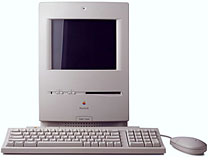
MY COLOR CLASSIC IS A CLASSIC

I’ve owned my Macintosh Color Classic for fifteen years. The computer’s packed away, increasingly obsolete. Recently, my parents asked me to sort through over thirty years of boxed memories, books, toys, and schoolwork that I had stashed in their basement. I minimized my life down to two boxes of mementos. Yet, I held onto my color classic. My parents asked why hold onto a computer that couldn’t even be used to simply browse the Internet. After several explanations, I realized my replies were basically a manifestation of irrational attitudes towards inanimate objects that only devout Mac worshippers exhibit.

A high school graduation gift from my parents, the Color Classic was my first computer. While most kids received cars, or stereos, my dream was a Mac. Sure, the PC clones were ubiquitous at East Coast schools, but the first computer I learned on was an Apple IIe. After seeing Ridley Scott’s Macintosh commercial, I sat through agonizing years, longing for one. The color classic was the only computer for me.

I reveled in the color classic’s style and solitariness. My color classic represented rebellion in a cold soul crushing PC world; I was Marlon Brando riding a Harley into town from the “Wild One,” answering the question of “what are you rebelling against” with “whaddya got?”

I probably couldn’t have picked a worst time to choose a Mac. Apple was just entering a slide into almost obsolescence, challenging even the most fanatic of users. I felt as if I was left with a machine that was abandoned by an embarrassed parent. Apple products were stashed in the backwoods of computer superstores. As the world became aware of the Internet, my small box with a USRobotics sportster (14.4 kbps), became a speed bump on the information highway. I could barely pull text email off of the web.

Eventually, after years of struggling, Apple reinvented itself. My classic and I had endured from the fringe of the computer world to being pioneers. I updated to a Powerbook G3, a far superior machine, however I was bonded to my little friend. We had survived college, late night essays, bad video games, the introduction to the Internet, calculus, emails to friends around the word. The inanimate computer had become the R2-D2 to my Luke Skywalker. I had no idea what I should do next with the computer.

One afternoon I was browsing the MoMa’s design gallery. There, behind the glass, was the exact copy of my color classic, an example of high design, forever preserved as a masterwork in one of the world’s great museums. My final answer to my parents on why my color classic needed to stay in their basement was that it was a museum piece and would they be so ready to throw out a Cezanne? But in my heart I know that even though my world has drastically changed since I high school, I’ll still have one friend forever waiting for me in all of its 16 MHz glory.